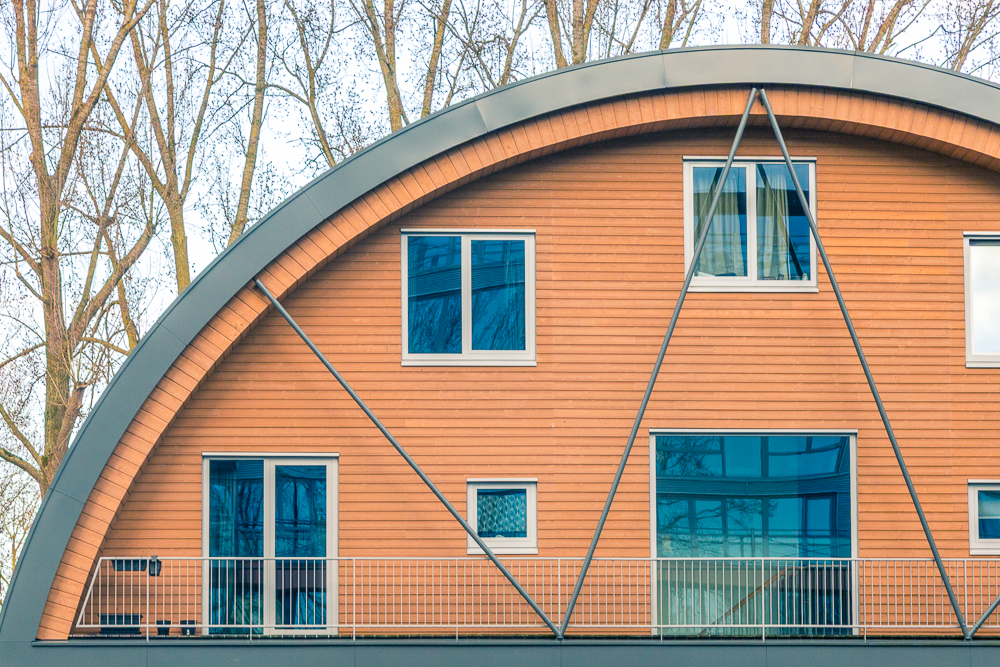
What is thermally modified spruce wood?
Thermally modified spruce wood is spruce that has undergone a special heat treatment in which the wood is, in effect, baked. This results in high durability against biological degradation and improved dimensional stability.
How is thermally modified spruce wood produced?
Thermal modification is carried out in an industrial environment using special drying chambers or ovens. The temperature rises to over 200°C and requires specialised installations compared to conventional drying chambers, which are heated to a maximum of approximately 90°C. Thermal modification can be applied to both softwood and hardwood. The thermal process can be divided into three phases:
Phase 1 High temperature drying
The oven is carefully heated to approximately 100°C. Once the wood moisture content is low enough, the temperature is further increased to the desired level. This is a maximum of approximately 220°C. During this process, the wood is dried back to a very low moisture content. Steam is added during the process to keep the oxygen level in the oven sufficiently low. This is important to prevent the risk of fire in the oven.
Phase 2 Thermal modification
After increasing the temperature, the oven is maintained at a constant high level for several hours, during which the actual modification takes place.
Phase 3 Cooling and conditioning
During the final phase, the temperature is reduced using a water spray system. Once the temperature has been sufficiently lowered, the wood moisture content is increased slightly again to approximately 4 to 7 percent.
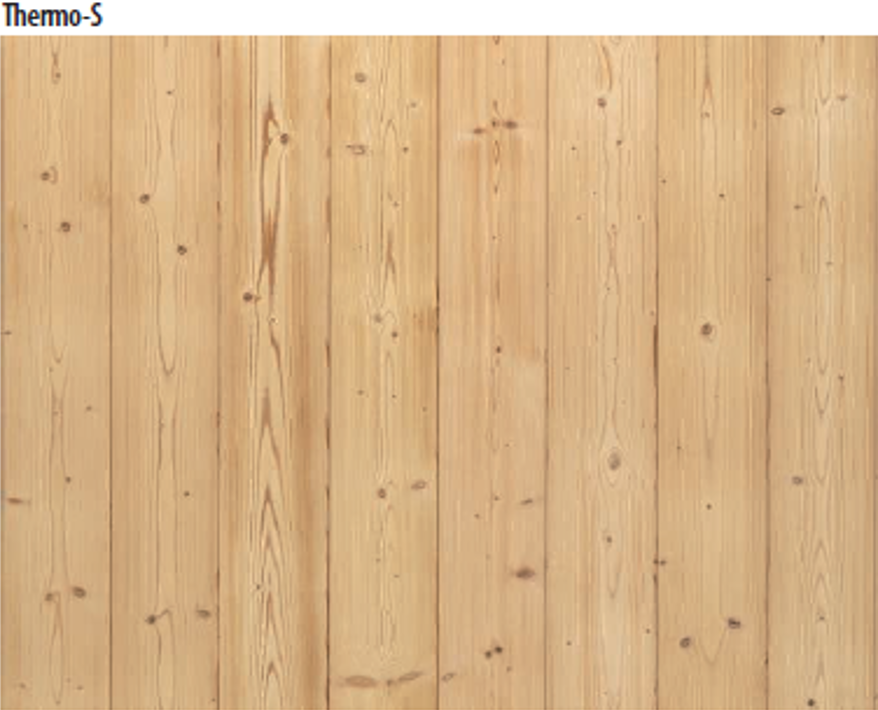
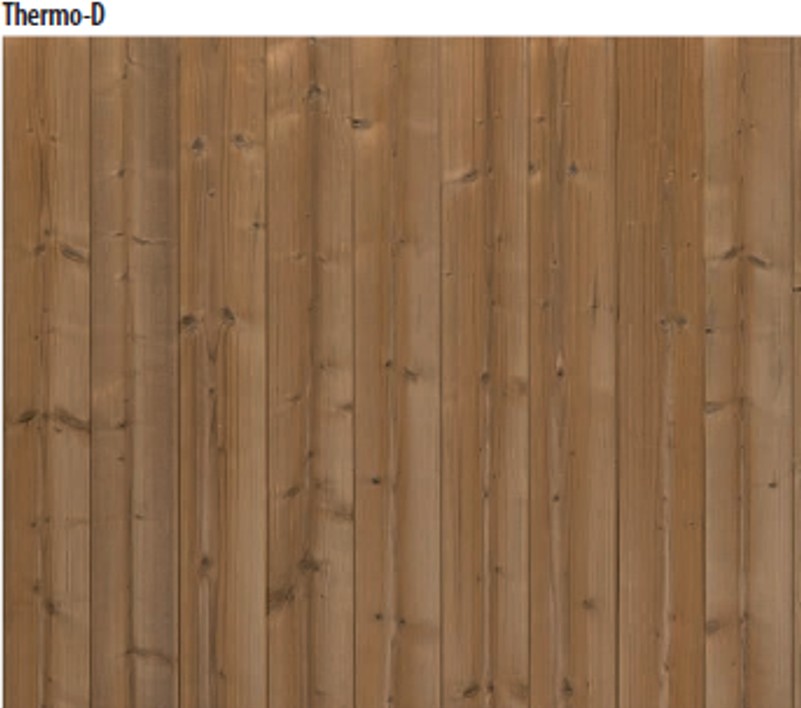
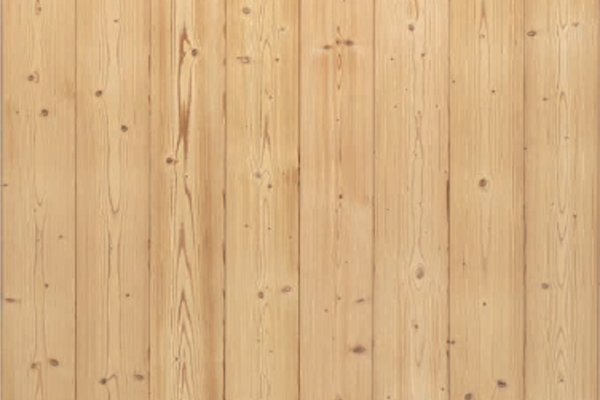
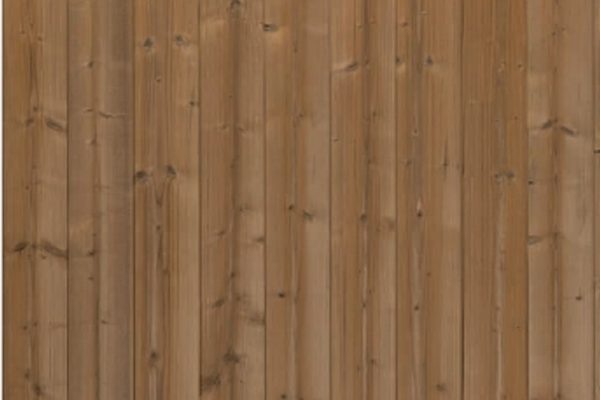
The duration of the thermal process depends on the product class Thermo S or Thermo D, the wood species, the moisture content, and the dimensions of the wood. The thicker the wood, the longer the process takes. The wood turns brown when heat alters its chemical composition. With Thermo S, the process duration is shorter, resulting in a lighter brown colour compared to Thermo D. Thermo D is qualitatively superior to Thermo S in all respects. However, if a lighter colour is desired, often for interior applications, Thermo S is frequently chosen. The new properties remain intact even when the wood is sawn or planed. The brown colour is also retained and is uniform throughout the entire cross section of the wood.
Thermal modification
Through this thermal treatment, the wood components, particularly hemicellulose and cellulose, are modified and or partially broken down. Wood decay often begins with an attack on hemicellulose because it contains many free sugars, allowing organisms to quickly access a food source. Since hemicellulose is virtually no longer present in thermally modified wood, a barrier is created that prevents wood decay fungi from attacking the wood. In addition, this modification of the wood components leads to a strongly reduced moisture absorption, making the wood less hygroscopic. As a result, there is insufficient moisture present for wood decay fungi to affect the wood. The reduced moisture absorption also means the wood will shrink and swell less, which improves dimensional stability.
What makes thermally modified spruce wood special?
The thermal modification process requires no chemicals or other additives. It is therefore a completely natural process using only steam and heat. It remains a wood product, simply with a different colour and improved properties for applications where this is desired. Thermally modified spruce wood has a higher natural durability than untreated spruce, class 2 compared to durability class 4 to 5. In addition, thermally modified spruce wood is dimensionally stable because it shrinks and swells less. Due to the thermal process, the wood has become less strong, which means it is structurally suitable for fewer applications. Nevertheless, it is very well suited for other applications, precisely because of its increased durability and dimensional stability.
Below are the key properties of thermally modified spruce:
- Increased natural durability class 2
- Reduced shrinkage and swelling behaviour
- Improved dimensional stability
- Dark colour throughout
- No resin and therefore no bleeding of extractives
- Lower thermal conductivity
- Lower density
Natural appearance and colour
Due to the thermal treatment, thermally modified wood acquires a rich, dark, and warm colour. Under the influence of weather and UV exposure, the wood will naturally turn grey in exterior applications. In the case of thermally modified spruce, this results in a very natural aesthetic appearance, partly due to the grain pattern and the knots that are almost always still present in spruce wood.
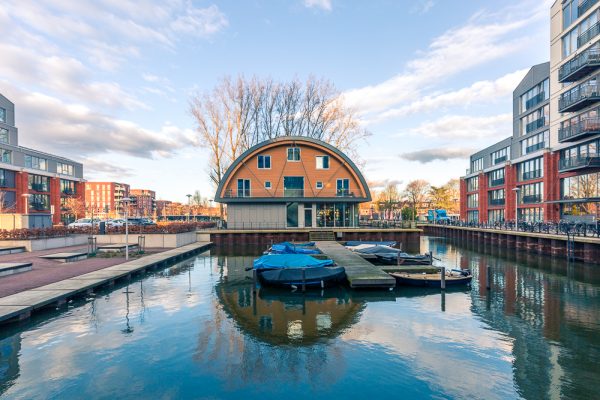
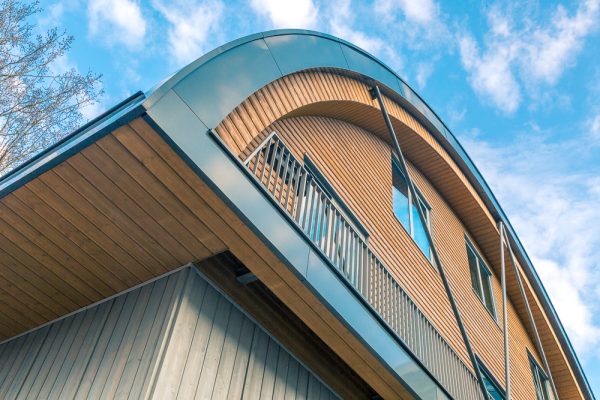
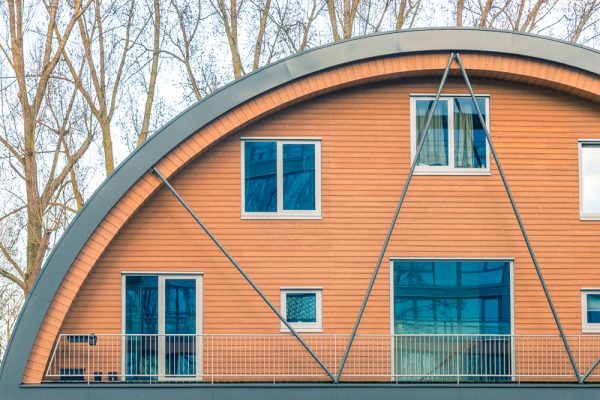
Wood facade cladding in projects
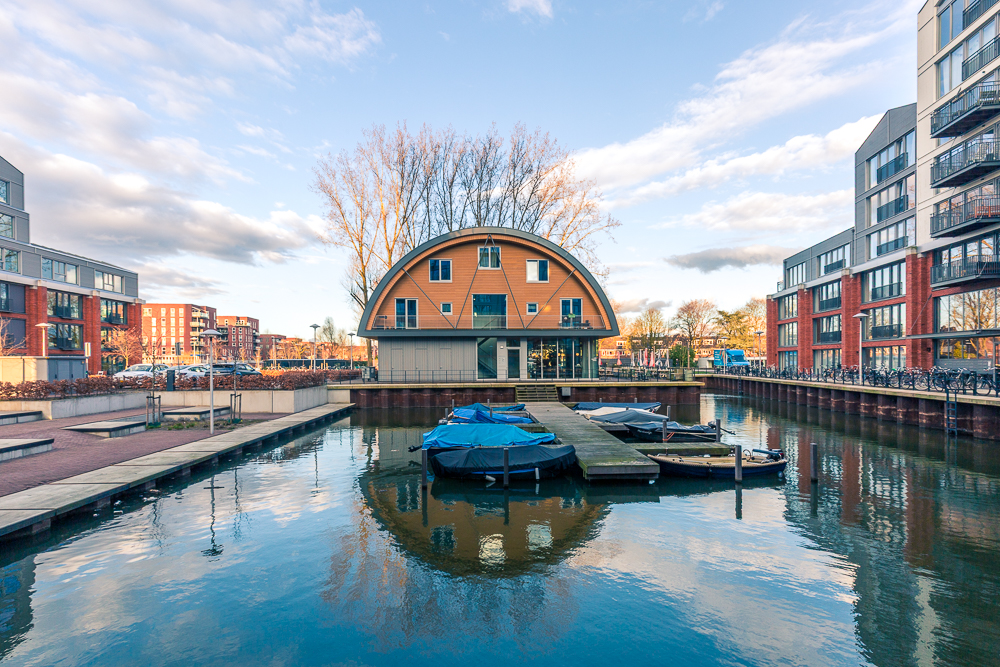
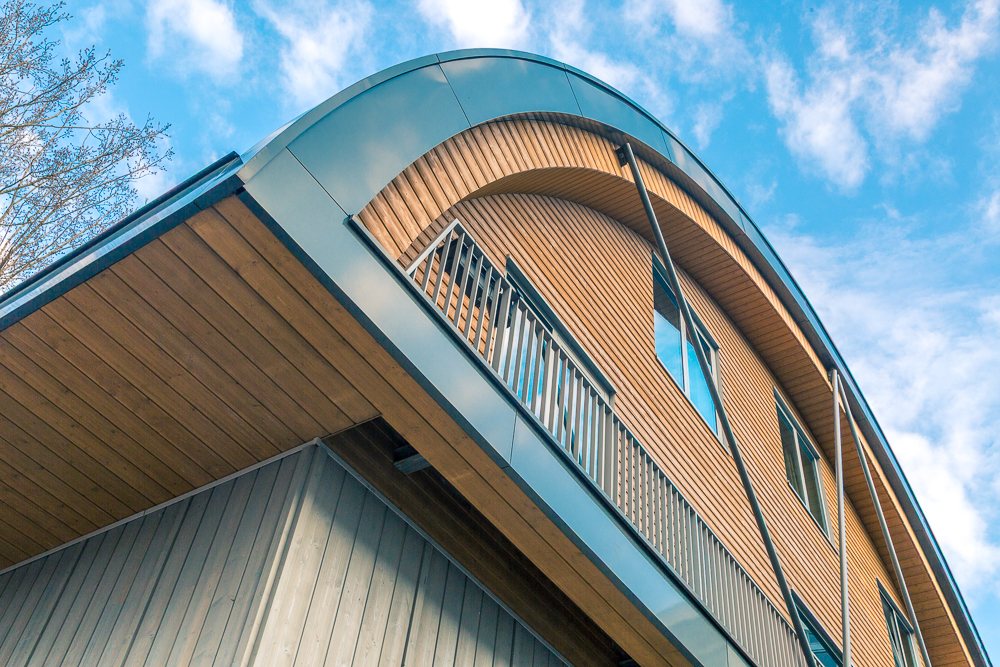
Leegwater Houtbereiding has built up extensive experience with thermally modified spruce facade cladding. The increased dimensional stability combined with a sustainable origin and environmentally friendly production process means it is increasingly chosen as a facade material.
Treatment of thermally modified spruce wood
Depending on the client’s requirements, Leegwater can colour treat thermally modified spruce using a coating system such as Colorseen Acrylic Stain Mat or a pre greying treatment such as Sansin Woodsealer. If no coating system is chosen, the spruce wood will naturally turn grey over time. If a fire retardant treatment is required, spruce can be treated with Flame Delay PT or Flame Delay FX Pro. Because thermally modified spruce loses moisture and weight during the process, it does not inherently perform well in terms of fire resistance. As a result, to achieve the minimum required fire class D, an additional treatment is always necessary. Leegwater offers a solution for this: Flame Delay SI, Surface Impregnation. Flame Delay SI can also be used for other wood products and end applications that cannot meet the standard class D requirement.
Advice & contact
Thermally modified spruce wood is a high quality and sustainable choice for facade cladding. It combines a natural appearance with significantly improved material properties, entirely without chemical additives. Leegwater Houtbereiding supplies this product including finishing options, fire retardant systems, and professional project support. Would you like more information about thermally modified spruce wood and its applications? Please contact us.